A Brief History of the Winter Olympic Games 

The Winter Olympic Games are a celebration of athleticism, resilience, and humanity’s enduring relationship with snow and ice. From humble beginnings in the early 20th century to today’s global spectacle, the Winter Olympics have evolved alongside the sports, technology, and cultures that define them. 

The Origins: Before the Winter Games Existed 

Before the Winter Olympics officially existed, winter sports were included—somewhat awkwardly—within the Summer Olympic Games. Figure skating made its Olympic debut in 1908 in London, and ice hockey followed in 1920 at the Antwerp Games. These early inclusions made it clear that winter sports deserved a stage of their own. 

At the same time, winter sport competitions were already thriving across Europe and North America, particularly in Nordic countries where skiing, skating, and ice sports were deeply rooted in everyday life. 

1924: The First Winter Olympics 

The first true Winter Olympics were held in Chamonix, France, in 1924, originally labeled the International Winter Sports Week. The event featured 16 nations, 258 athletes (only 11 of whom were women), and six sports: 

  • Bobsleigh 
  • Curling 
  • Ice hockey 
  • Figure skating 
  • Nordic skiing 
  • Speed skating 

The success of the Chamonix Games led the International Olympic Committee (IOC) to retroactively recognize them as the first Olympic Winter Games, officially establishing the Winter Olympics as a recurring event. 

Growth and Global Expansion 

Throughout the 1930s and 1940s, the Winter Games grew steadily—despite interruptions caused by World War II, which led to the cancellation of the 1940 and 1944 Games. 

After the war, the Winter Olympics became a powerful symbol of international unity and recovery. New nations joined, women’s participation increased, and more events were added, reflecting both innovation and tradition. 

Notable milestones include: 

  • 1956 (Cortina d’Ampezzo): The first Winter Olympics broadcast on television. 
  • 1960 (Squaw Valley): Introduction of electronic timing and the debut of biathlon. 
  • 1980 (Lake Placid): The iconic “Miracle on Ice” hockey victory, one of the most famous moments in Olympic history. 

New Sports, New Generations 

As winter sports evolved, so did the Games. Snowboarding debuted in 1998, followed by freestyle skiing, skeleton, short track speed skating, and mixed-gender events. These additions helped attract younger audiences and reflect changing athletic cultures. 

The Winter Olympics also became more global, with athletes from countries without traditional winter climates competing—and winning—on the world stage. 

Separating Summer and Winter Games 

Until 1992, the Summer and Winter Olympics were held in the same year. Beginning in 1994, the IOC staggered the Games so they would alternate every two years. This change allowed the Winter Olympics to gain greater visibility and focus, solidifying their identity as a major global sporting event. 

Olympic Winter Games Milano Cortina 2026: A Guide to What’s Ahead


In February 2026, the world will once again turn its attention to the Olympic Winter Games—this time in the stunning alpine and urban landscapes of Milano Cortina, Italy. From historic city ice rinks to dramatic mountain venues carved into the Dolomites, Milano Cortina 2026 promises to be a Winter Games defined by tradition, innovation, and breathtaking competition. 

At the Utah Olympic Legacy Foundation (UOLF), we believe the Olympic story doesn’t begin and end with medals. It lives in the events themselves—the sports, the rules, the athletes, and the years of preparation that lead to a single moment on the world stage. That’s why we’re launching a new article series to help you better understand where the Games are happening, how each event works, and which U.S. athletes to watch as the competition unfolds. 

When Are the Milano Cortina 2026 Olympic Winter Games? 

Competition at the Olympic Winter Games Milano Cortina 2026 is scheduled to begin on February 4, 2026, with the Opening Ceremony on February 6, and will conclude with the Closing Ceremony on February 22, 2026. Over those 19 days, athletes will compete for 116 medal events across a wide range of winter sports. 

Where Are the Games Being Held? 

Unlike past Games centered in a single host city, Milano Cortina 2026 is organized into four primary geographic clusters, each highlighting different sports and landscapes: 

  • Milano Cluster
    Home to the Opening and Closing Ceremonies, as well as ice hockey, speed skating, figure skating, and short track speed skating.
  • Valtellina Cluster
    Featuring freestyle skiing and snowboarding in Livigno, ski mountaineering, and men’s alpine skiing on the iconic Stelvio course.
  • Cortina Cluster
    Hosting women’s alpine skiing on the Tofane slopes, curling, sliding sports (bobsled, skeleton, and luge), and biathlon in nearby Anterselva.
  • Val di Fiemme Cluster
    Showcasing Nordic sports, including ski jumping in Predazzo and cross-country skiing in Tesero.
     

This multi-venue approach reflects a growing emphasis on sustainability, legacy infrastructure, and regional identity—values that closely align with UOLF’s mission here in Utah. 

What This Series Will Cover 

In the coming weeks and months, this series will break down: 

  • Each Olympic winter sport and how it works
  • What to watch for during competition
  • Key rules, formats, and scoring systems
  • U.S. athletes and storylines to follow
  • How Olympic venues—past and present—shape athlete development and community impact


Whether you’re a lifelong winter sports fan or tuning in for the first time, our goal is to help you watch the Games with a deeper understanding and appreciation for the athletes, venues, and Olympic legacy behind every run, jump, and finish line. 

Milano Cortina 2026 is more than a global event—it’s the next chapter in a century-long Olympic tradition. And here at UOLF, we’re proud to help connect that story to the athletes, communities, and future Olympians inspired by it. 

Stay tuned as we dive into each sport, one event at a time.

What It Means to Be an Olympian, Part 2: The Value of Friendship

When people think about what it means to be an Olympian, they often picture medals, national flags, and fierce competition. Those moments matter—but after hosting both the Speedskating World Cup and the Luge World Cup at Utah Olympic Legacy Foundation venues, we were reminded that another value sits just as firmly at the heart of the Olympic movement: friendship.


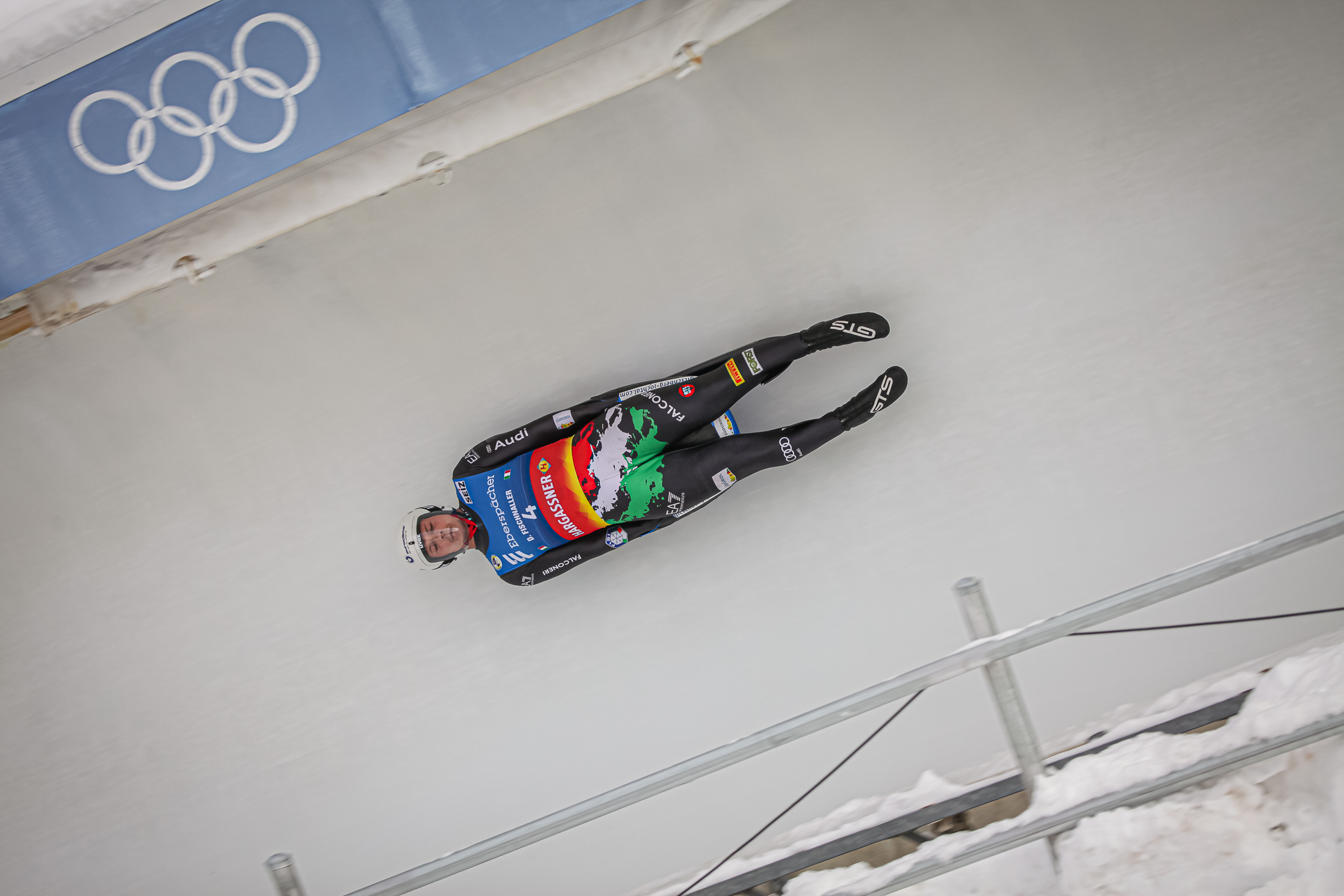
Over the course of these events, athletes from all over the world came together in Utah—representing different countries, cultures, languages, and lived experiences. On the ice and the track, they competed at the highest level. Off the ice, something equally powerful unfolded. We watched athletes laugh together, cheer for one another, trade pins, share meals, and reconnect with friends they’ve made through years of international competition.


At the Utah Olympic Oval and Utah Olympic Park, the venues weren’t just competition spaces—they became meeting places. Athletes who might face each other as rivals in one race were encouraging one another the next. Conversations crossed borders effortlessly. A nod of respect at the finish line, a shared smile in the warm-up area, or athletes from different nations celebrating personal bests together reminded us that sport has a unique way of breaking down barriers.


In a world that often feels deeply divided—politically, culturally, and socially—those moments matter. They show us what’s possible when people meet each other first as humans, not headlines. The friendships formed through sport aren’t about ignoring differences; they’re about recognizing them and choosing connection anyway.


This is especially meaningful at events like World Cups, where athletes return season after season. Many of them grow up together on the international circuit. They witness each other’s injuries, setbacks, breakthroughs, and victories. These shared experiences create bonds that last well beyond a single competition—and sometimes well beyond their athletic careers.


At the Utah Olympic Legacy Foundation, we see this as part of our mission. Our venues exist not only to train champions, but to foster community, understanding, and shared experience. When we host international events, Utah becomes a gathering place for the world—a reminder of what the Olympic values look like in action.


Being an Olympian isn’t just about standing on a podium. It’s about standing alongside others, even when you’re competing against them. It’s about respect, empathy, and friendship forged through shared pursuit and mutual admiration.


As we look ahead toward future World Cups—and toward 2034—we carry this lesson with us. In moments when division feels loud, the friendships we witnessed on the ice and the track speak just as loudly. They remind us that sport can still bring the world together, one race, one handshake, and one shared moment at a time.

Legacy in Action: How Community Support Turns Dreams Into Reality 

Olympic legacies are often measured in medals, records, and historic moments. But in Utah, the true legacy lives somewhere deeper—in the quiet determination of a young athlete lacing up skates for the first time, in a volunteer standing in the cold before sunrise, and in a community that believes opportunity should never be out of reach. 

At the Utah Olympic Legacy Foundation, community support is what transforms ambition into possibility. Every donation, every volunteer hour, and every partnership plays a role in shaping the path from curiosity to confidence—and sometimes, all the way to the world stage. 

Where Dreams Begin 

For many athletes, the journey doesn’t start with podiums or international competition. It starts with access. 

Access to a facility.
Access to equipment. 
Access to a coach who believes in them. 

Community support makes that access possible. Scholarships and program funding open doors for kids who might otherwise never experience winter sport. First-time lessons become first victories, and early exposure becomes the foundation for lifelong growth—whether that athlete continues on to elite competition or carries those lessons into school, work, and life. 

Building More Than Athletes

The impact of community support extends far beyond athletic performance. Sport teaches resilience, discipline, teamwork, and confidence—skills that shape strong individuals and stronger communities.
Through UOLF programs and venues, youth and adults alike find a place where effort is valued, failure is part of learning, and growth is celebrated. These experiences build leaders, teammates, and problem-solvers who carry the Olympic values of excellence, respect, and friendship wherever they go. 

The Power of Giving Back 

Behind every athlete’s story is a network of supporters making it possible. 

Volunteers who give their time to events, programs, and competitions.
Donors who invest in opportunity rather than outcome.
Community partners who believe in the long-term impact of sport. 

This collective commitment fuels everything UOLF does—from hosting World Cups that inspire future generations, to maintaining world-class venues that serve Utah year-round, to ensuring financial barriers never stand in the way of participation. 

A Living Legacy 

Legacy isn’t something we wait for—it’s something we build every day. 

When the community shows up, dreams move from imagined to achievable. Young athletes discover what they’re capable of. Families find belonging. And Utah continues to grow a legacy rooted not just in past Olympic moments, but in future potential. 

Help Turn the Next Dream Into Reality 

Your support makes this work possible. 

A gift to the Utah Olympic Legacy Foundation helps provide scholarships, maintain world-class venues, and expand access to sport for kids and families across Utah. Whether it’s a first lesson or a future Olympian’s training day, your generosity helps write the next chapter of Utah’s Olympic legacy.

Donate today and be part of the legacy in action.

Together, we can ensure that opportunity—and inspiration—are always within reach. 

Why Snowmaking Has Been Limited at Utah Olympic Park


We’ve received a few questions about snowmaking at Utah Olympic Park in Park City, and we’re happy to share a little more about how the process works and why weather conditions play such an important role.

Snowmaking Is About More Than Just Temperature

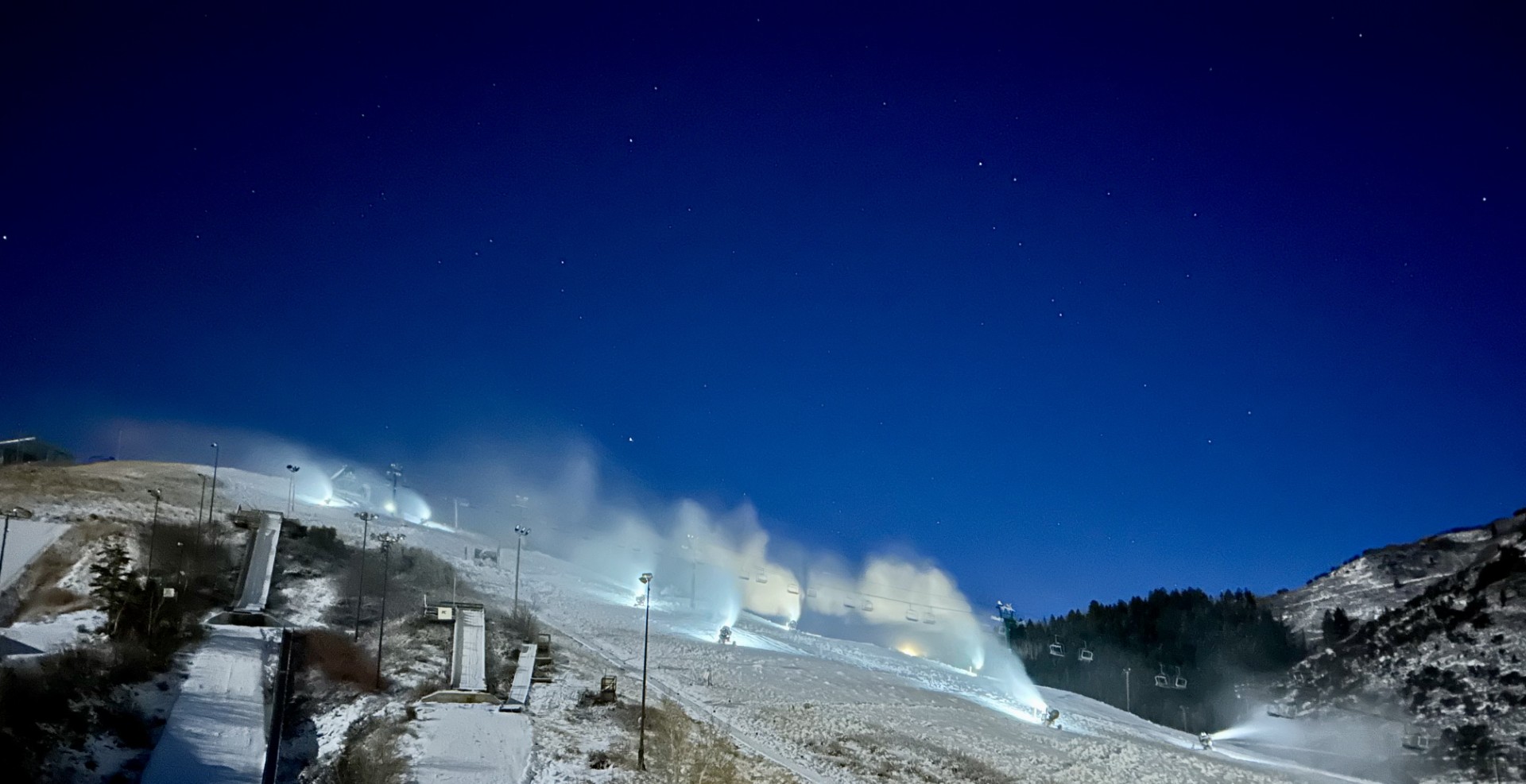
It’s common to think that snow can be made anytime temperatures are near freezing, but snowmaking actually depends on a combination of factors. One of the most important is wet-bulb temperature, which takes both air temperature and humidity into account. This measurement helps determine whether water sprayed into the air will freeze before it reaches the ground.

In general, snowmaking becomes effective when the wet-bulb temperature is around 28°F or lower. Colder and drier conditions—often between 10–20°F—allow snow to form more quickly and efficiently.

What We’ve Seen Recently in Park City

From November 24 through December 15, Park City experienced a mix of weather patterns, including several warmer-than-normal daytime temperatures in the 40s and low 50s, along with moderate humidity. Overnight temperatures did occasionally dip closer to freezing, but the added moisture in the air often meant wet-bulb temperatures remained higher than what’s ideal for consistent snowmaking.

Based on available temperature and humidity data from this period, the average wet-bulb temperature is estimated to have been in the mid-to-upper 30s, which is above the typical threshold needed to make snow effectively. While there were brief windows that came close, they weren’t long or cold enough to allow snowmaking to happen efficiently.

Why Conditions Matter

Snowmaking works by spraying fine droplets of water into the air, where they cool and freeze into snow crystals as they fall. Colder, drier air allows this process to happen more easily. When the air is warmer or more humid, droplets take longer to freeze and may reach the ground as water instead of snow.

Wind also plays a role—calmer conditions give droplets more time to freeze before being carried away.

A Thoughtful, Weather-Driven Approach

Snowmaking requires significant resources, including water and energy, so timing matters. Our team closely monitors weather conditions to identify the best opportunities to make snow in a way that’s effective, responsible, and supportive of long-term snow quality.

Looking Ahead

As soon as colder and drier conditions return and wet-bulb temperatures drop into a favorable range, snowmaking will resume. Overnight temperature trends are especially important, and we’re ready to move quickly when conditions align.

We appreciate everyone’s curiosity and interest. Snowmaking is both a science and a collaboration with the weather, and we’re always happy to help explain how it works and what we’re watching for as the season progresses.

Utah Olympic Park to Host Two Public Open Houses on Proposed Development

PRESS ADVISORY
For Immediate Release
October 27, 2025 


Utah Olympic Park to Host Two Public Open Houses on Proposed Development 

Park City, Utah — The Utah Olympic Legacy Foundation (UOLF) invites the public to attend one of two open houses to learn more about proposed development plans at the Utah Olympic Park. 

The open houses will provide an opportunity for community members to view concept plans, ask questions, and share feedback with representatives from the Utah Olympic Legacy Foundation and project partners. 


Event Details: 

Wednesday, November 5 | 6:00–8:00 PM
Utah Olympic Park – Quinney Welcome Center

Tuesday, November 11 | 6:00–8:00 PM
Utah Olympic Park – Quinney Welcome Center  

These sessions are designed to foster transparency and collaboration as UOLF explores future improvements to enhance athlete training, visitor experience, and community access while preserving the Olympic legacy that defines the Park. 

Members of the public, media, and local stakeholders are encouraged to attend. 


Media Contact:
Gabby Saunders
Communications Manager
Utah Olympic Legacy Foundation
[email protected] 


Utah Olympic Legacy Foundation Honored with 2025 Utah AEE Energy Champion Award 

FOR IMMEDIATE RELEASE
October 21, 2025 

Media Contact:
Gabby Saunders
Communications Manager, Utah Olympic Legacy Foundation
Email: [email protected] 


Utah Olympic Legacy Foundation Honored with 2025 Utah AEE Energy Champion Award 

Salt Lake City, Utah — The Utah Olympic Legacy Foundation (UOLF) has been recognized by the Association of Energy Engineers (AEE) Utah Chapter with the 2025 Energy Champion Award in the Not-for-Profit category, honoring the organization’s commitment to sustainability and energy efficiency across its three Olympic legacy venues: the Utah Olympic Oval, Utah Olympic Park, and Soldier Hollow Nordic Center.


The award was presented at the Utah Energy Efficiency Symposium on October 21, 2025, at the SLCC Karen Gail Miller Conference Center in Sandy, Utah. UOLF leadership, including Todd Porter and Gayle Day, attended the luncheon to accept the award on behalf of the Foundation.


“This recognition highlights years of dedication to operational excellence and environmental stewardship,” said Calum Clark, Chief Operating Officer of the Utah Olympic Legacy Foundation. “Our team has worked diligently to ensure that the venues built for the 2002 Olympic Winter Games continue to set the standard for sustainability as we look ahead to a carbon-neutral 2034 Games.” 


At the Utah Olympic Oval, the Foundation implemented a new HVAC automation system, upgraded ammonia compressors for ice-making, installed a magnetic-bearing chiller for space cooling, and redesigned the boiler system to enhance efficiency and longevity. The Oval’s solar array, installed in 2014, remains a landmark in UOLF’s renewable energy commitment. At the Utah Olympic Park in Park City, the bobsled track ammonia control system was overhauled to greatly reduce energy use while maintaining world-class ice conditions. Additional upgrades include real-time weather monitoring and advanced building automation for the Olympic Museum. At Soldier Hollow Nordic Center, system-wide improvements include snowmaking technology optimized through head-specific weather detection and groomer controls that reduce energy and water consumption. The venue also operates on 100% renewable energy through a partnership with Heber Power & Light. 


The Utah Olympic Legacy Foundation continues to advance its mission of preserving and enhancing Utah’s Olympic venues as vibrant, community-focused centers for sport, recreation, and inspiration. 


About the Utah Olympic Legacy Foundation
Established in 2002 after the Olympic Winter Games, the Utah Olympic Legacy Foundation is a nonprofit organization dedicated to maintaining and growing Utah’s Olympic venues, inspiring active lifestyles, hosting world-class events, and fostering the next generation of athletes. Learn more at UtahOlympicLegacy.org. 

Utah Olympic Legacy Foundation President Colin Hilton to receive the S.J. Quinney Award for Visionary Leadership

MEDIA ADVISORY
FOR IMMEDIATE RELEASE

Contact:
Gabby Saunders, Communications Manager
Utah Olympic Legacy Foundation
[email protected] | 801-638-6010
UtahOlympicLegacy.org

WHO: Colin Hilton, President and CEO of the Utah Olympic Legacy Foundation (UOLF), will be presented the S. J. Quinney Award by Barbara Yamada, chair of the Ski and Snow Sports Archives Board. Before leading UOLF, Hilton served in key roles for the FIFA World Cup Soccer Tournament and the 1996 Olympic Games in Atlanta, later helping guide Utah’s successful 2002 Olympic and Paralympic Winter Games and its continued legacy today.
WHAT: The J. Willard Marriott Library at the University of Utah will honor Colin Hilton and the Utah Olympic Legacy Foundation for their contributions to preserving and advancing Utah’s Olympic and winter sports heritage.
Under Hilton’s leadership, the Foundation delivers a robust and measurable economic contribution to the state of Utah each year. Annual spending by UOLF and visitors to its three Olympic venues supports an estimated 1,045 jobs, $78 million in GDP, and $132 million in industry output through direct, indirect, and induced economic activity. Visitors to the venues spent an estimated $11.9 million in fiscal year 2023, largely on accommodations, transportation, dining, and recreation, due to UOLF’s operations attracting over 90,000 out-of-state visitors annually.
Additionally, since 2002, UOLF’s facilities have hosted more than 250 international winter sport competitions and provided over 140,000 athlete training days in fiscal year 2023. Making UOLF and its venues instrumental in Salt Lake City being named the preferred host for the 2034 Olympic and Paralympic Winter Games, further reaffirming Utah’s reputation as a leader in international sport and event readiness.
WHEN: Wednesday, October 29, 2025 at 6:00 p.m.
WHERE:
Cleone Peterson Eccles Alumni House
University of Utah
155 South Central Campus Drive
Salt Lake City, Utah
WHY: This recognition celebrates the enduring partnership between Utah’s higher education, sport, and Olympic communities—each vital in sustaining the legacy that began in 2002. Through its venues at the Utah Olympic Park, Utah Olympic Oval, and Soldier Hollow Nordic Center, UOLF continues to strengthen Utah’s position as a global leader in sport, tourism, and youth development.
About the Utah Olympic Legacy Foundation
The Utah Olympic Legacy Foundation is a 501(c)(3) nonprofit organization dedicated to preserving and enhancing the legacy of the 2002 Olympic and Paralympic Winter Games through sport, education, and community engagement. The Foundation operates the Utah Olympic Park, the Utah Olympic Oval, and the Soldier Hollow Nordic Center, which together generate more than 130 million dollars in annual economic impact and welcome over 500,000 visitors each year. Through its continued stewardship and expertise, the Utah Olympic Legacy Foundation plays an important role in shaping Utah’s future as the preferred host for the 2034 Olympic and Paralympic Winter Games.

Why Legacy Matters: How Utah’s Olympic Story Continues to Grow

When Salt Lake City hosted the Winter Olympic Games in 2002, it did more than put Utah on the world stage. It transformed how we saw ourselves as a state. Those seventeen days of competition and celebration ignited a legacy of community, progress, and pride that continues to shape Utah’s future. 

Now, with Salt Lake City named the preferred host for the 2034 Winter Olympic Games, the story comes full circle. The investments made more than twenty years ago continue to deliver benefits to our people, our economy, and our shared identity. As we prepare to welcome the world again, it is worth remembering how much Utah gained from 2002—and why the legacy still matters. 

A Spirit of Community Pride 

Perhaps the most lasting gift of the 2002 Games was the unity it created among Utahns and across the United States. Coming just months after 9/11, the nation was still healing — and Utah became a beacon of hope. Residents filled the stands, purchased forty percent of all Olympic tickets, and volunteered by the tens of thousands. The atmosphere was electric. People from every corner of the state came together to show the world what Utah hospitality and American resilience truly meant. 

That same spirit still defines us today. From youth sports programs to family events at our Olympic venues, the pride born in 2002 continues to inspire new generations. Utahns and Americans alike proved that when our communities come together — even in the face of uncertainty — we can accomplish something extraordinary. 


Infrastructure That Built a Foundation 

The 2002 Olympics accelerated infrastructure growth that would have taken decades under normal circumstances. From the expansion of I-15 and I-80 to the construction of new world-class venues, the Games helped shape modern Utah. 

The Utah Olympic Park, Utah Olympic Oval, and Soldier Hollow Nordic Center were built not only for elite athletes but also for the public. Today, those venues remain vibrant hubs for recreation, training, and events, thanks to the stewardship of the Utah Olympic Legacy Foundation, established after the Games to preserve and maintain them for generations to come. 

Every time a family skates on the Oval’s ice, a child learns to ski at Soldier Hollow, or a visitor explores the jumps at the Utah Olympic Park, they are experiencing the legacy of 2002 in action. 

An Economic Success Story 

Hosting the Olympics brought an enormous economic boost to Utah. According to the University of Utah’s Kem C. Gardner Policy Institute, the Games produced over $6.1 billion in total economic output and ended with a $163 million surplus, including $59 million returned to taxpayers. 

That kind of success is rare in Olympic history. Careful planning and collaboration between public and private sectors ensured that the benefits of the Games extended well beyond the closing ceremony. Two decades later, those investments continue to generate growth, opportunity, and long-term financial strength. 

Global Visibility and Tourism Growth 

The world’s attention on Utah during the Games created lasting results. Viewers from around the globe were introduced to Utah’s beauty, hospitality, and adventure. What they saw brought them back again and again. 

In the years following the Games, Utah experienced a 43 percent increase in annual skier visits, a 25 percent rise in National Park tourism, and a 59 percent increase in visitor spending. These visitors became lifelong ambassadors for Utah, strengthening both tourism and business development across the state. 

A Legacy of Sport and Excellence 

The 2002 Games marked the beginning of Utah’s rise as one of the world’s great winter sports capitals. Since then, our state has hosted dozens of major events, including World Cups, Olympic Trials, and national championships across nearly every discipline. 

The Utah Sports Commission, created as a direct result of the Games, has continued to attract professional sporting events of all kinds, from traditional winter competitions to events like UFC 278, Supercross, and pro skateboarding championships. 

But beyond medals and headlines, the true legacy lies in the everyday athletes who train, compete, and dream in Utah’s Olympic venues. For them, the Games are not a memory; they are a living opportunity to chase excellence. 

Creating Jobs and Long-Term Opportunity 

The preparation and hosting of the Olympics created thousands of jobs across Utah’s economy. More than 45,000 job-years were generated through construction, event operations, hospitality, and related industries. 

Even after the Games concluded, those opportunities continued to grow. The leisure and hospitality industry saw nearly a 50 percent increase in employment, creating long-term stability and growth in outdoor recreation and tourism sectors that remain vital to Utah’s identity and economy. 

Looking Forward to 2034 

The stage is set once again. With venues already in use, infrastructure in place, and a community that understands what it takes to host the world, Utah is better prepared than any city in modern history to deliver another successful Winter Olympic Games. 

The 2034 Games will build on a foundation that has already proven its value—one that was never intended for a single event, but for lasting progress. Hosting again is not about repeating the past. It is about continuing the story, expanding the legacy, and ensuring that future generations can experience the same pride and opportunity that began in 2002. 

That is why legacy matters. It is not just about what we built; it is about what we continue to build together. 

At the Utah Olympic Legacy Foundation, we are proud to carry this legacy forward. Every athlete, every event, and every child who learns the value of sport adds another chapter to Utah’s Olympic story—one that began in 2002 and will shine even brighter in 2034. 

What It Means to Be an Olympian: Excellence

Looking back at the 2022 Winter Olympic Games in Beijing, American athletes demonstrated what it means to strive for excellence on the world stage. Nathan Chen delivered a gold-medal performance in men’s figure skating, while Chloe Kim repeated as champion in women’s snowboard halfpipe.  

Lindsey Jacobellis, after years of perseverance, won gold in women’s snowboardcross and later teamed with Nick Baumgartner to win the mixed team event. Kaillie Humphries captured gold in the inaugural women’s monobob competition, Erin Jackson became the first Black woman to win Olympic gold in speed skating, and Alex Hall took top honors in men’s slopestyle freestyle skiing.  

The mixed team aerials trio of Ashley Caldwell, Chris Lillis, and Justin Schoenefeld soared to victory, and the U.S. figure skating team, led by Chen, Madison Chock, Evan Bates, and others, earned gold as well. These triumphs reflected not only individual achievement but also the foundation of excellence that sustains American sport. 

The seeds of these successes can be traced back to Utah and the legacy of the 2002 Winter Games. Those Games concluded more than two decades ago, yet their influence has remained strong. The venues constructed for the Olympics were preserved through a $74 million endowment, ensuring they would remain active and relevant long after the Closing Ceremony.  

Today, the Utah Olympic Park, the Utah Olympic Oval, and Soldier Hollow Nordic Center host recreational leagues, lessons, tours, and youth programs while also serving as training centers for elite athletes. This commitment to preservation and growth embodies the Olympic value of excellence, defined as striving to be one’s best and encouraging others to do the same. 

The intent behind this legacy was clearly articulated. Senator Mitt Romney, who led the Salt Lake Organizing Committee, reflected at the fifteenth anniversary of the Games that Utah had hoped to become the center of winter sport in North America. The vision was for the venues to remain active, to attract athletes from across the United States, and to elevate American performance on the world stage. This was excellence understood not as a single moment of achievement, but as a sustained commitment to nurturing future possibility. 

The results have been striking. At Beijing 2022, one third of Team USA’s 223 athletes had ties to Utah, whether by growing up here, attending school, or training in the state. Utah produced more Olympic athletes than any other state, a direct outcome of both the inspiration of the 2002 Games and the availability of world-class training facilities. Many of these athletes had once been children watching in awe as Olympic competition unfolded in their own communities. Two decades later, they stood at the start line themselves, carrying forward the spirit of excellence that Utah helped instill. 

Excellence has extended beyond winter sport to reshape Utah’s broader identity. Communities across the state drew confidence from the Games, discovering that large-scale events could thrive in Utah. St. George, for example, emerged as a hub for endurance sports, hosting the Ironman World Championships and other global competitions. These opportunities arose in part because Utah had proven its ability to host the 2002 Games with success and professionalism. In this way, the pursuit of excellence radiated outward, shaping both sport and community life. 

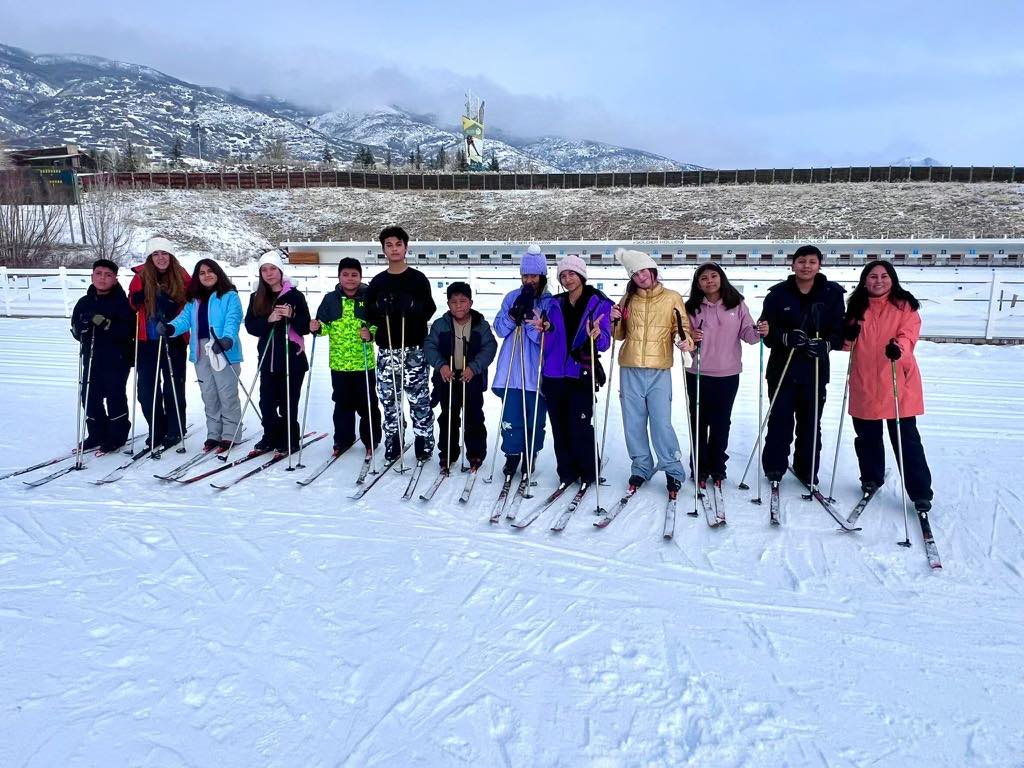
Utah’s Olympic venues continue to cultivate excellence daily. The Utah Olympic Oval, still known as the “Fastest Ice on Earth,” has hosted more than 100 world records and provides training opportunities for skaters at every level. Soldier Hollow introduces thousands of students to skiing each winter, instilling lessons of persistence and resilience. At the Utah Olympic Park, aerialists and ski jumpers train with courage and precision, pushing themselves to achieve what once felt impossible. Tens of thousands of youth participate annually in UOLF programs, discovering that excellence is not confined to the podium but is developed through progress, persistence, and the pursuit of personal bests. 

Excellence, then, is more than medals or world records. It is a culture embedded in facilities, communities, and shared values. It is a commitment to push past limits, to pursue growth, and to encourage others to do the same. The legacy of the 2002 Games shows that when excellence is deliberately cultivated, it endures across generations. 

As the world turns its attention to Milano-Cortina in 2026, Utah’s role in fostering Olympic excellence remains clear. Access to these world-class venues will continue to produce more athletes with Utah roots, and with them, more American champions on the global stage. Excellence in Utah has already shaped the past, and it will continue to shape the future of sport.